

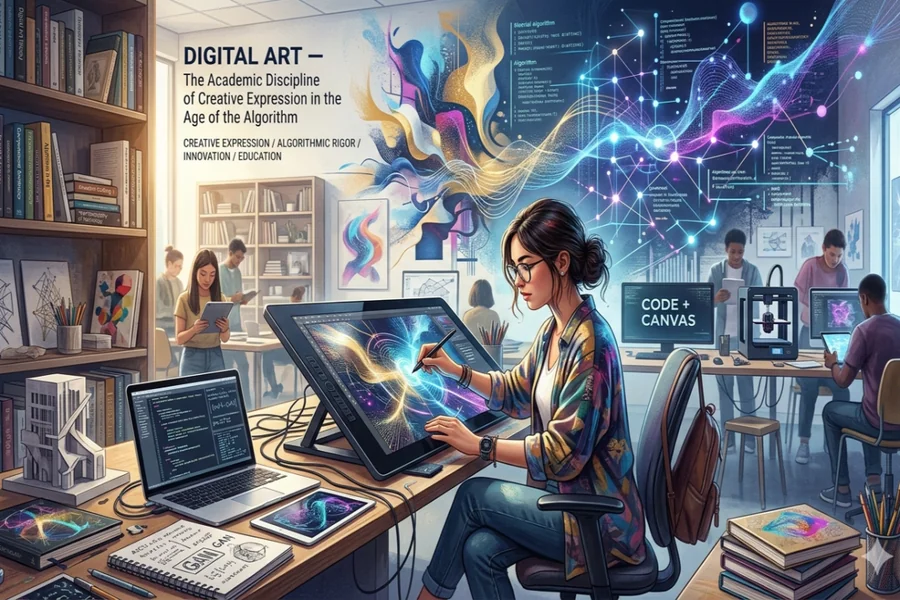
The landscape of digital creation has undergone a seismic shift over the past few years. For generations, bringing a vivid mental picture into the physical world required a specific set of technical skills. If you wanted an arresting illustration, a precise product mock-up, or a moody editorial banner, you either needed years of mastery in complex vector software and digital painting tablets, or a dedicated budget to commission professional artists. That formidable barrier to entry has steadily dissolved. Today, anyone equipped with a keyboard, an internet connection, and a clear vision can summon striking imagery out of thin air.
Yet, moving beyond casual experimentation to consistently produce publication-ready visuals requires a deeper understanding of how modern generative systems interpret human language. Behind every compelling piece of artificial intelligence imagery lies a sophisticated interplay of semantic tokenization, latent space navigation, and thoughtful descriptive phrasing.
Whether you are building an independent brand, populating an editorial publication, or simply exploring the outer boundaries of digital design, mastering the art of descriptive communication has become an indispensable modern skill.
Deconstructing the Anatomy of a Great Prompt
When beginners first experiment with generative art tools, they often rely on overly simplistic phrases like a futuristic city or a cozy coffee shop. While these basic inputs will yield an image, the results are frequently generic, unpredictable, or entirely detached from what was originally imagined. This occurs because generative models do not think like humans; instead, they evaluate statistical weights across vast networks of learned visual data.
To unlock exceptional, professional-grade outputs, you must approach your text input as a precise set of instructions rather than a casual search query. A robust, well-engineered prompt generally relies on five core layers:
1.The Primary Subject: The hero of your frame. Be exceptionally specific. Instead of writing a cat, try a fluffy ginger cat sitting attentively on a vintage velvet armchair.
2. The Artistic Medium: Define your visual style explicitly. Are you aiming for an archival 35mm film photograph, a textured oil painting with visible brushstrokes, a clean minimalist vector graphic, or a detailed 3D digital render?
3. The Environmental Lighting: Light dictates the emotional resonance of a scene. Terms like diffused overcast daylight, dramatic neon rim lighting, soft golden hour glow, or moody chiaroscuro shadows completely transform the mood.
4. Camera Physics and Perspective: For photographic styles, mimicking real-world camera settings yields incredible realism. Mentioning focal lengths such as an 85mm portrait lens with a shallow depth of field instructs the model on how to handle background blur and perspective.
5. Color Harmony: Guide the palette. Modifiers like desaturated pastel tones, vibrant cyberpunk neon hues, or warm earthy terracotta shades ensure the color narrative supports your overarching concept.
Stacking these descriptive layers thoughtfully allows you to step out of the role of a passive lottery player and into the role of an active director guiding a digital canvas.
Breaking Free from Homogenized Stock Photography
For decades, digital publishers, bloggers, and marketing teams relied heavily on massive stock photography repositories. While convenient, this reliance created a homogenized internet where thousands of unrelated websites utilized the exact same smiling customer service representatives or generic corporate handshake photos. These stock assets rarely capture the exact nuance of a specific brand’s voice or an article’s unique editorial thesis.
Furthermore, traditional stock licensing comes with ongoing subscription costs and rigid legal restrictions regarding modification and commercial distribution. When you integrate a versatile AI image generator into your daily workflow, those frustrating limitations vanish entirely.
You no longer waste hours hunting through endless keyword pages trying to find a photograph that only almost fits your topic. Instead, you fabricate a custom asset tailored down to the final pixel to match your exact narrative requirements. This shift slashes operational overhead and guarantees an entirely unique visual footprint that your competitors cannot replicate.
From Novelty to Realism: The Technical Leap
Early iterations of artificial intelligence art were notorious for subtle uncanny valley artifacts, twisted human hands, blurry backgrounds, nonsensical floating objects, and distorted geometry. While these quirks provided a whimsical novelty at first, they rendered the technology impractical for serious commercial campaigns or professional publishing.
The latest wave of generative architectures has largely conquered these hurdles through advanced multi-layered rendering pipelines. Modern models possess a far deeper semantic understanding of real-world physics, human anatomy, and spatial relationships. When you specify a wet pavement reflecting neon signage after a rainstorm, current models calculate the angle of incidence, shadow diffusion, and surface gloss with astonishing accuracy.
This leap in technological maturity means creators can now produce publication-ready banners, product background mockups, and conceptual illustrations that stand shoulder-to-shoulder with professional studio work, all generated in a matter of seconds directly from a desktop browser.
Streamlining Editorial and Social Media Workflows
Maintaining a high-frequency publishing schedule across multiple digital channels is a relentless challenge. Whether you manage a lifestyle blog, a growing YouTube channel, or a corporate LinkedIn presence, every single piece of content demands eye-catching visual packaging to capture dwindling user attention spans.
Integrating generative tools into your content pipeline fundamentally alters your turnaround time. Consider the traditional workflow for a single blog post header: brainstorming an idea, searching stock sites, paying for a license, opening photo-editing software to crop and adjust dimensions, and finally exporting.
With modern prompt-driven creation, that entire cycle condenses into a single step. You conceptualize the image while writing the article text, generate the exact visual atmosphere you want instantly, and deploy it immediately. This seamless efficiency frees up valuable hours, allowing creators to focus heavily on high-level strategy, deep writing, and audience engagement rather than getting bogged down in minor asset sourcing logistics.
Cultivating a Cohesive Brand Aesthetic
One of the most common misconceptions among new creators is that artificial intelligence tools produce random, chaotic styles that make brand consistency impossible. In reality, maintaining a unified visual identity comes down to establishing a disciplined system of style anchors.
Just as a physical brand guide dictates specific hexadecimal color codes, typography weights, and logo placements, a successful content strategy relies on a consistent vocabulary of stylistic modifiers. By appending a signature set of descriptive phrases to every prompt you write such as minimalist composition, soft matte finish, neutral beige and charcoal color palette you train the model to output assets that look like they belong to a single, carefully curated photoshoot.
This level of aesthetic control allows independent creators and boutique agencies to build instant brand recognition and visual trust with their audiences.
Frequently Asked Questions (FAQs)
How do generative AI art tools interpret text prompts?
Generative systems use advanced machine learning models trained on billions of image-text pairs. When you enter a prompt, the algorithm breaks your words down into mathematical tokens and navigates a massive multi-dimensional latent space to reconstruct pixels that statistically match your description.
Can I legally use AI-generated images for commercial projects?
In most cases, yes. Leading generative platforms typically grant users commercial rights to the images they create. However, copyright regulations surrounding AI-generated art continue to evolve globally, so it is always wise to review the specific terms of service of the platform you use.
Do I need any artistic drawing skills to use these tools?
No traditional drawing, painting, or advanced graphic design skills are required. The primary skill needed is clear, descriptive communication often referred to as prompt engineering which involves detailing subjects, lighting, perspective, and style through natural language.
How can I stop my generated images from looking artificial or generic?
To avoid a generic look, move beyond simple phrases and layer specific artistic modifiers into your prompts. Include detailed lighting directions (e.g., volumetric morning haze), specific camera equipment terminology (e.g., 50mm prime lens), and unique stylistic instructions rather than relying on the AI to guess your intent.
How do I maintain a consistent look across multiple generated images?
Consistency is achieved by using style anchors—a repeating set of descriptive keywords, color palettes, and structural phrases that you include in every prompt you write. Keeping your underlying aesthetic vocabulary uniform ensures all your generated assets share a cohesive visual family resemblance.
Conclusion
The intersection of human imagination and artificial intelligence marks a profound turning point in digital expression. By moving past rudimentary prompts and embracing structured, descriptive engineering, creators can unlock unprecedented levels of versatility, speed, and artistic freedom.
Whether you are bypassing the repetitive cycle of generic stock photos, prototyping complex design concepts on the fly, or building a unified brand aesthetic from scratch, generative tools act as a powerful catalyst for modern storytelling. The future of digital media belongs to those who can articulate their vision clearly transforming abstract thoughts into striking, tangible realities with a few well-chosen words.
