

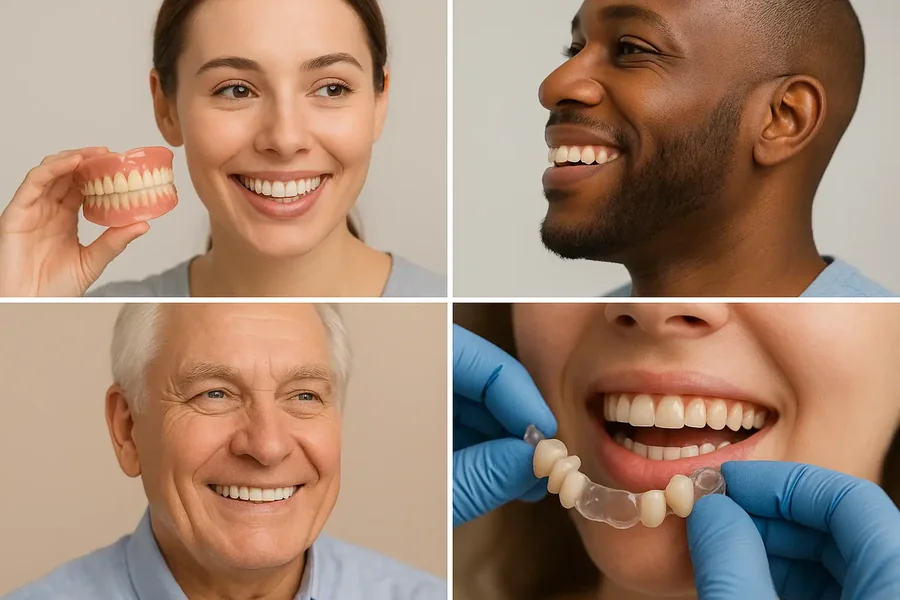
Anyone who’s spent time looking at before-and-after veneer photos has probably noticed the split: some results look like the person’s own teeth, just better, while others have that unmistakable, uniformly white, slightly-too-perfect look sometimes called “Chiclet teeth” or “Hollywood veneers.” Since both sets of results start from the same basic material, thin porcelain or composite shells bonded to the front of teeth, the difference isn’t really about the technology. It comes down to a handful of specific design and planning decisions made well before any porcelain is placed.
Why Planning Matters More Than the Material Itself
Clinical research on cosmetic dental planning has found that patients who go through a structured smile design process, including a preview of the proposed result before treatment begins, report meaningfully higher satisfaction and confidence than patients who go straight from consultation to treatment. A systematic review of digital smile design studies found consistent improvements in patient-reported satisfaction and treatment acceptance when a planning and preview step was included, and one study following 28 patients using a digital planning and physical mock-up process found the vast majority rated the preview process as effective or very effective at helping them visualize and approve the final result before it was permanent.
The reason this matters for how natural a result looks isn’t just about managing expectations. The planning process itself is where decisions get made, tooth shape, size, and proportion, that determine whether a final result blends with a person’s face or looks like it was dropped in from a stock photo.
What Actually Separates a Natural Result From an Obvious One
Individual tooth variation, rather than uniform shape. Natural teeth aren’t identical to each other. Front teeth vary slightly in length, edge shape, and even minor rotation from one side of the mouth to the other. Veneers designed as a uniform, symmetrical row, rather than accounting for this natural variation, are one of the most common reasons a smile reads as artificial even when the individual teeth are well-made.
Shade selection relative to the rest of the mouth and face. A shade that looks bright and appealing in isolation can look conspicuously white against a person’s natural skin tone, the whites of their eyes, or their remaining natural teeth if not every visible tooth is being replaced. Experienced cosmetic dentists typically select shade in relation to the whole face, not just what looks brightest on a color chart.
Translucency and light behavior. Natural enamel isn’t uniformly opaque, it has subtle translucency, particularly toward the edges of the teeth, that allows some light to pass through the way it would through real tooth structure. Lower-quality or poorly matched porcelain can look flat and opaque by comparison, which is part of what gives some veneers an artificial, almost chalky appearance under certain lighting.
Proportion relative to the lips and face, not just the teeth themselves. Veneer length and width are typically planned in proportion to a person’s lips, gumline, and facial features, not as a generic “ideal” smile applied identically to every patient. A smile design that ignores this context can look objectively “nice” in a mirror but out of place on a specific face.
How many teeth are actually treated. A veneer’s shade and shape only need to blend with what’s immediately next to it. When only the front several teeth are veneered and the back teeth remain their natural, slightly different color, an artificial-looking contrast can show up specifically when someone smiles widely, an issue a thorough consultation should catch and plan around before treatment begins.
Why a Preview Step Makes This a Collaborative Decision, Not a Guess
Because so much of what separates a natural result from an artificial one comes down to subjective judgment calls, shape, shade, proportion relative to an individual face, a preview step (whether a digital smile design mockup or a physical trial version placed temporarily on the teeth) gives a patient the chance to see and adjust these decisions before anything is permanent. This is particularly valuable because a patient’s own sense of “not too white” or “not too uniform” is deeply personal, and a preview turns that judgment into a conversation with a dentist rather than a surprise after the final veneers are cemented.
What This Means When Evaluating a Provider
Because outcome quality is driven so heavily by planning and individual judgment rather than the underlying material, a provider’s approach to the design and preview phase is worth asking about directly. A practice offering veneers in Irvine that incorporates digital smile previews as part of the standard consultation process is applying exactly the kind of planning step the research points to as a meaningful driver of both patient satisfaction and how natural the final result actually looks.
The Bottom Line
The difference between veneers that look natural and veneers that look obviously artificial has less to do with porcelain quality and much more to do with the planning decisions made before treatment: individual tooth variation, shade selection in context, translucency, and proportion relative to the whole face. A structured design and preview process is what allows those decisions to be made deliberately and adjusted before they’re permanent, rather than left to chance once the final veneers are already bonded in place.
