

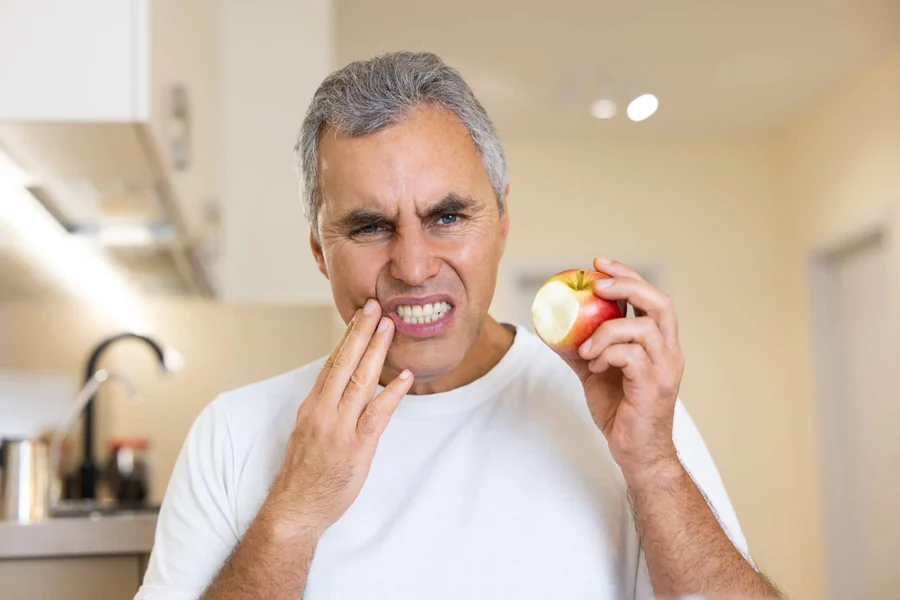
Getting a cavity filled or a damaged tooth crowned is supposed to solve a problem, not create a new one. So it can be genuinely confusing when a tooth that was just treated still hurts, or starts hurting for the first time, specifically when biting down. This happens often enough that it’s a well-studied phenomenon in dental research, not an unusual complication, and understanding the common causes makes it much easier to know when it’s expected to settle on its own versus when it needs a follow-up visit.
How Common Is This, Really?
Postoperative sensitivity after a dental restoration is a well-documented and fairly common occurrence. Clinical studies on composite fillings alone have reported rates ranging broadly, with some research finding postoperative sensitivity in as few as 5 to 6 percent of certain restorations and other studies reporting rates above 20 percent in the first week after treatment, depending on the restoration’s size, location, and complexity. One practice-based research network study following 665 restorations found that while restoring a tooth eliminated existing sensitivity in 63 percent of cases, it introduced new sensitivity in about 10 percent of teeth that had none beforehand. Across nearly all of this research, the pattern is consistent: some sensitivity is common in the days immediately following treatment, and it typically decreases significantly within the following weeks to a few months.
That said, “common” and “something to ignore” aren’t the same thing, and the specific type of pain matters a great deal in figuring out which category a given case falls into.
Why Pressure-Specific Pain Is Different From General Sensitivity
A tooth that hurts to hot or cold but feels fine otherwise is describing a different problem than a tooth that hurts specifically under biting pressure. Temperature sensitivity typically points to the dentin, the layer beneath enamel, being newly exposed or irritated, which often calms down on its own as the tooth adjusts. Pain that shows up specifically when biting down, however, usually points to something mechanical: the restoration itself is sitting slightly too high, creating a pressure point that concentrates force in a way the tooth wasn’t designed to handle, or in some cases the pressure is transmitting irritation down into the tooth’s nerve.
This distinction is exactly why “my filling hurts to cold” and “my tooth hurts when I bite down” often get different explanations from a dentist, even though both are technically forms of postoperative sensitivity.
What Usually Causes Bite-Specific Pain After a Restoration
A restoration sitting slightly too high. Even a very small discrepancy, sometimes less than the width of a piece of paper, can be enough for a tooth to make first contact when biting down, concentrating force onto that one tooth instead of distributing it evenly across the bite. This is one of the most common and most fixable causes of pressure-related pain after a filling or crown, and it’s usually resolved quickly with a simple adjustment.
Inflammation of the nerve inside the tooth. Deep decay, a deep filling, or the preparation process for a crown can bring dental work close enough to the tooth’s nerve to cause temporary inflammation, sometimes called pulpitis. In milder cases, this settles on its own over days to weeks. In more significant cases, it can be a sign the nerve needs further treatment.
A restoration that doesn’t match the surrounding bite pattern. Especially with larger restorations or a crown covering an entire tooth, restoring the correct shape and alignment relative to neighboring and opposing teeth involves real precision. A restoration that’s slightly misaligned relative to the rest of the bite can create pressure in a way that shows up specifically when chewing.
Underlying issues that existed before treatment. Sometimes a restoration is placed correctly, but the tooth already had an issue, deeper decay than initially visible, or a small crack, that the treatment didn’t fully resolve. In these cases, the pain isn’t really about the restoration itself but about something the restoration didn’t fully address.
When It’s a Crown Specifically
Bite-related pain after a crown deserves its own explanation, since a crown covers the tooth’s entire visible structure rather than repairing one section, and the range of possible causes is somewhat broader: an improper fit, gum recession exposing sensitive root surfaces near the crown’s edge, bruxism (nighttime grinding) putting repeated pressure on the restoration, or in rarer cases, a sensitivity to the crown’s specific material. For anyone dealing specifically with this symptom, why does my crown hurt when I put pressure on is addressed directly in a detailed breakdown from Dentistry of Midland, covering the specific diagnostic steps a dentist uses to narrow down which of these crown-specific causes applies to a given case.
When to Wait, and When to Call
A little sensitivity in the days immediately after a filling or crown is normal and often resolves on its own. Pain that’s sharp, that gets worse rather than better over a week or two, or that’s clearly triggered every single time pressure is applied to one specific tooth, is a reasonable signal to schedule a follow-up rather than wait it out. A quick adjustment to correct a high spot is often all that’s needed, and catching a more serious issue, like nerve involvement, earlier rather than later generally leads to a simpler and less invasive fix.
The Bottom Line
Some degree of sensitivity after a filling or crown is a normal, well-documented part of the healing process, not necessarily a sign that something went wrong. What matters most is the specific pattern: general sensitivity to temperature that’s fading over time is usually fine to monitor, while sharp, consistent pain when biting down is worth a follow-up visit, since it often points to something as simple as a high spot that a quick adjustment can resolve.
