

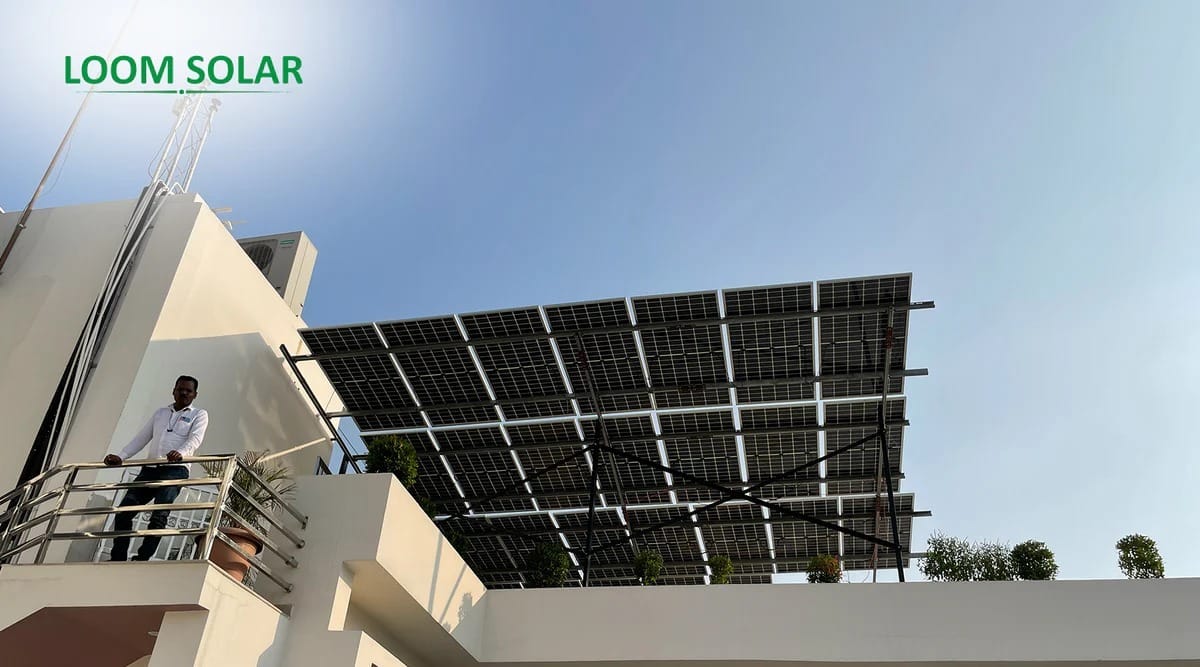
The most recent development in solar technology, bifacial solar panels significantly increase energy output. Bifacial solar panels have a 25% higher energy generation capacity than conventional solar panels. Their special design, which lets sunlight enter from both the front and the rear, is the reason for this growth. Direct sunlight is captured on the front side, while reflected light from adjacent structures, the ground, or specifically made reflecting surfaces is captured on the back side.
Enhanced Efficiency with Dual Mode Functionality
What distinguish bifacial solar panel is their dual mode capabilities. Like any other solar panel, the front panel collects direct sunlight. However, 25% more energy is produced overall since the rear panel collects reflected sunlight. When compared to conventional panels, their efficiency is much increased because to its capacity to catch ambient light from both sides.
N-Type vs. P-Type Solar Panels
N-type solar cells, which have a higher efficiency rate of more than 22%, are frequently used in bifacial solar panels. P-type solar cells, on the other hand, are frequently found in other solar panels and have an efficiency range of 18% to 20%. P-type panels are less powerful than N-type panels, which often have a watt range of about 550W. Because of its greater power output and efficiency, N-type bifacial panels are the best option for optimizing energy generation.
Market Share and Future Growth
At the moment, bifacial solar panels account for 5% of the market in the industrial, commercial, and residential sectors. Over the course of the next four to five years, this percentage is anticipated to increase dramatically. The main factor fueling this expansion is the growing scarcity of space, especially in cities, for solar panel installations. The demand for more effective and room-saving alternatives, such bifacial panels, increases as living areas get smaller.
Major Manufacturers in India
Bifacial solar panels are being produced by a number of prominent Indian producers, such as Adani, Waaree, and Loom Solar. These businesses are aware of the rising need for more effective solar solutions that can maximize the small amount of space available for installation. These producers are positioned themselves to satisfy the growing market for high-efficiency solar panels by making investments in bifacial technology.
Benefits of Bifacial Solar Panels
The capacity of bifacial solar panels to optimize space usage is one of its main advantages. They are perfect for roofs and other limited locations since they produce more power from a smaller installation area. Bifacial panels also have a charming look, going well with a variety of architectural designs. They are therefore a well-liked option for installations in both homes and businesses.
Comparing Bifacial and Half-Cut Solar Panels
The utilization of solar cells is the main distinction between half-cut and bifacial solar panels. A methodical configuration of bifacial solar cells—which have the ability to absorb light from both sides—is used to create bifacial panels. They are more efficient than half-cut panels, which only let light in from one side, thanks to this design element. Because of this, a growing number of customers in the industrial, commercial, and residential sectors are converting to bifacial solar panels to meet their energy demands.
Installation Challenges
There are several restrictions with bifacial solar panels, notwithstanding their benefits. For best results, they need a high installation area. Installation might be difficult in situations where customers do not have reinforced cement concrete (RCC) roofs. Furthermore, because there is little to no reflection from the installation surface, bifacial panels lose a significant amount of their effectiveness when placed on tin shade roofs, such those seen on factories.
Bifacial Solar Panel Price in India
In India, the starting bifacial solar panel price is ₹21,750. Loom Solar is offering these cutting-edge panels at the lowest price as of July 13, 2024. Bifacial solar panels are an appealing choice for both residential and commercial customers wishing to optimize their installation area and maximize their energy production due to their affordable cost. The cost of bifacial panels is anticipated to propel their adoption across a range of industries, as the demand for effective and space-saving solar solutions increases.
Conclusion
In conclusion, bifacial solar panels mark a substantial advancement in solar technology. They have the potential to produce up to 25% more power and have greater efficiency rates, which will position them to dominate the solar market. Their advantages far exceed their disadvantages, which makes them an excellent option for optimizing solar energy production—especially in situations where space is limited—despite occasional installation difficulties.
