

Concrete is the foundation of contemporary architecture; consequently, developments in technology for mixing concrete are transforming our construction techniques. These innovations promise to offer improved efficiency, sustainability, and durability, from material enhancements to smart integration.
It also discusses the new developments and trends relating to concrete mixer technology that could be vital for future development in the construction sector.
Evolution of Concrete Mixing Technology
Concrete has been one of the most fundamental materials used in building construction since ancient times (Bijen, 1986). The conventional method of mixing concrete involved hand-mixing using crude means that have been developed into modern mechanized mixers for ages.
The invention of rotating drum mixers in the early 20th century was a major milestone because it made consistent and efficient mixing more accessible (Kim & Park, 2010). In this regard, there have been major improvements within this period, with greater emphasis on achieving better consistency and sustainability.
Advancing the Fundamentals: High-Performance Concrete
One major achievement that can be associated with high-performance concrete is its discovery.
HPCs are designed to have better properties than typical concrete, including enhanced workability, durability, and strength. This can be done by using advanced admixtures like superplasticizers, which can reduce water demand as well as improving compressive strength.
HPC development has been boosted by supplementary cementitious materials such as fly ash, silica fumes, and slag. These also improve sustainability because they reduce Portland cement demand through energy consumption during manufacture, therefore enhancing environmental friendliness.
Self-Consolidating Concrete: Simplifying Construction
SCC flows easily and spreads into position without the mechanical vibration required to fill up formwork. In structures with dense reinforcement, SCC is especially useful for complex designs where traditional mixes may not flow and compact properly.
SCC offers many advantages, such as a shortened construction period, reduced labor costs, and better-quality finishes for floors. Additionally, the absence of mechanical vibration renders construction sites safer and less noisy. The development of SCC demonstrates how creative concrete technologies can streamline construction processes and improve final project results.
The Role of Automation and Smart Technology
Consequently, automation and smart technology have been integrated into concrete mixing and building. Automated batching plants fitted with advanced sensors and control systems can ensure accurate mixtures of concrete components by minimizing human errors in the process, leading to improved uniformity. These arrangements can follow the mixing process in real time, which results in maximum performance.
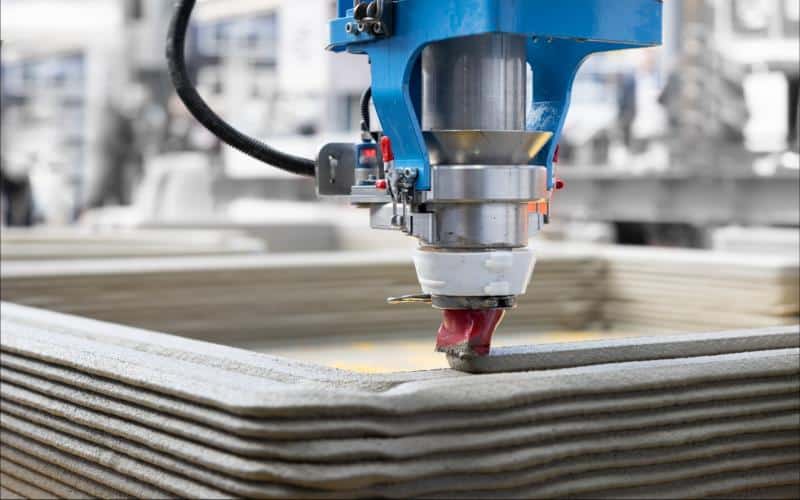
Also, drones are being employed to conduct site surveys, while 3D printing technology is used to create complex concrete structures with minimal waste and fewer workers required during construction.
Concrete solutions that are sustainable
Modern construction is all about sustainability, and one of the ways in which this has been approached is through technology in concrete mixers. Green concrete, a development that uses recycled materials to lower emission rates, is becoming popular. The conservation of natural resources and the reduction of waste can be realized by using recycled aggregates such as crushed concrete or glass.
Moreover, carbon capture and utilization techniques are being used to create carbon-negative concrete. Scientists’ goal is to reduce the carbon footprint of cement production significantly by involving trapped CO2 in the mixture for concrete. These sustainable solutions not only serve environmental conservation but also align with the increasing need for sustainable building practices.
Concrete Vibrator Price in Kenya: Why It Matters
Kenya is witnessing a construction boom with increasing demand for quality concrete works. A key requirement for achieving desired quality in concrete is the use of a concrete vibrator, which helps eliminate air bubbles or voids, thereby resulting in stronger structures that will last longer time periods.
Price is key when it comes to concrete vibrators for builders and contractors in Kenya. Constructing projects involving these vibrators, therefore, would be greatly improved by inexpensive and efficient ones. Thus, understanding the concrete vibrator price in kenya and selecting the correct equipment may lead to cost savings as well as better project outcomes.
Factors that determine how much you will pay for a concrete vibrator
Several factors influence the cost of concrete vibrators in Kenya. These encompass what type it is, whether it is electrically powered, gasoline-powered, or pneumatic-driven; the brand name too has its own say here.
Also important are such additional features as frequency and amplitude settings. Though they may be pricey at first sight, quality products offered by highly regarded companies perform much better than their cheaper counterparts and last longer, thus saving you money eventually.
Making Informed Choices
When you think about the cost of a concrete vibrator in Kenya, it is important to strike a balance between cost and quality. The cheap ones could save one some money at first, but they would lead to higher maintenance and shorter operating lives.
On the other hand, buying a dependable and efficient vibrating machine means that cement manufacturing does not fluctuate much, hence fewer chances of building inadequacies as well as costly repairs.
Final Thoughts
The development of concrete technologies leads to increased efficiency, sustainability, and a high-quality construction industry. Progress like high-performance and self-consolidating concrete mixes, automation, and smart technology integration now replace traditional practices. Solutions for sustainability include addressing existing environmental concerns, while tools such as vibrators for concrete remain vital, especially in areas that are developing rapidly, like Kenya.
Understanding how much it costs for a concrete vibrator in Kenya will help you make informed decisions when purchasing the equipment required for construction purposes. The future of concrete mixing looks even brighter due to advancing technology leading to more innovations in this sector, which makes the building industry stronger and more sustainable.
