

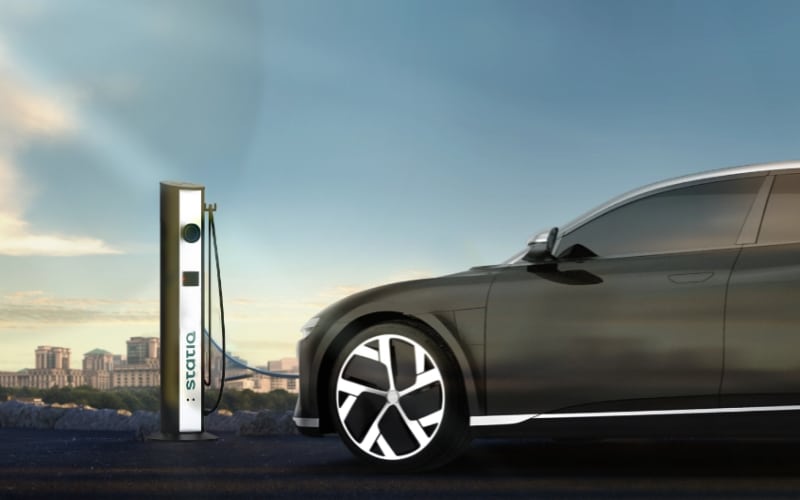
The monsoon season brings relief from the scorching heat but also throws up a few questions for electric vehicle owners. Many people have this misconception that EVs cannot perform well in waterlogged areas during rain and thunderstorms. In this blog, we will bust all the myths surrounding electric vehicles. Read this blog if you want to know the common myths that need to be busted for more clarity around the functions and durability of EVs.
Myth 1: Electric vehicles can’t handle waterlogged areas.
Busted: Modern EVs boast impressive water resistance. They are built with an Ingress Protection (IP) rating, typically IP65 or IP67. This rating signifies their protection against dust and water. An IP67 rating means the battery and critical components can withstand submersion in up to a meter of water for 30 minutes. So, driving through puddles or even moderately flooded streets shouldn’t cause any problems.
Myth 2: Lightning is more dangerous for EVs.
Busted: EVs are no more susceptible to lightning strikes than conventional gasoline vehicles. Both rely on a metal frame that acts as a Faraday cage, conducting electricity around the passenger cabin and grounding it safely. Studies by the NHTSA (National Highway Traffic Safety Administration) support this fact.
Myth #3: Charging an EV in the rain is dangerous.
Busted: EV chargers are designed to be weatherproof and shockproof. They undergo rigorous testing to meet safety standards. Additionally, the charging connector is designed to prevent water ingress. So, you can plug in for a recharge during a downpour without any worries. Statiq, India’s largest EV charging station network, has IP 55-rated EV chargers installed across India. These chargers are built to withstand water and dust, making them safe for EV users.
Myth 4: Monsoon rains reduce driving range.
Busted: While extreme weather conditions new york times connections can affect battery performance in any vehicle, the impact on electric vehicles is minimal. Modern battery management systems (BMS) are designed to optimize performance irrespective of temperature. However, using climate control systems like the heater or air conditioner more frequently during the monsoon might see a slight decrease in range.
Myth 5: EVs need special maintenance during the monsoon.
Busted: Regular maintenance is crucial for any vehicle, EV or gasoline-powered. However, there’s no specific monsoon season maintenance required for EVs. Following the manufacturer’s recommended service schedule is sufficient.
Myth 6: EVs aren’t suitable for long monsoon journeys.
Busted: With increasing charging infrastructure and improved range on newer EVs, long monsoon journeys are feasible. Trip planning and utilizing fast-charging stations along the way can ensure a smooth and convenient electric road trip, even during the monsoon. In India, Statiq has installed more than 7,000 EV chargers across 65+ cities. Additionally, now you can find other companies’ EV charging stations on the Statiq app, making it more convenient for EV users.
So, the next time the monsoon arrives, there is no need to worry; just take out your EV and enjoy clean and efficient driving. And, for hassle-free EV charging services, charge at Statiq EV charging stations.
