

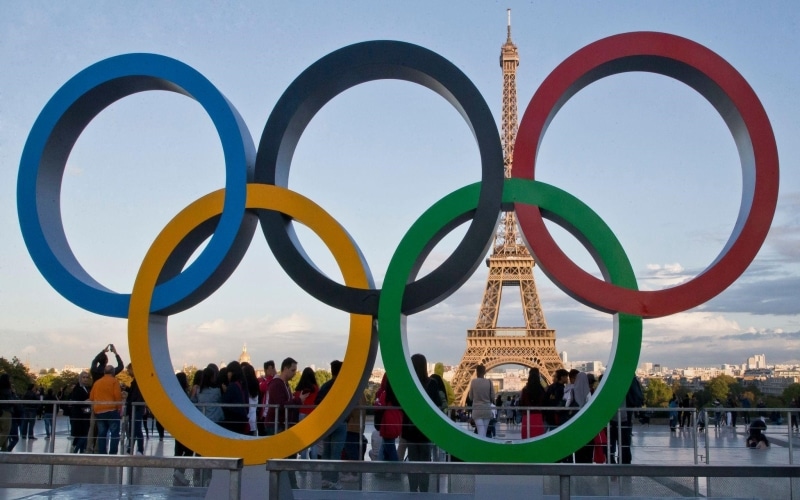
The 2024 Summer Olympics are only a month away, and while athletes are busy making last-minute preparations for the upcoming games in Paris, France, the athletics governing body’s decision to award prize money to gold medal winners continues to divide opinion on all levels.
The Olympic Games are an exciting time for anyone with even the remotest interest in track and field sports. For the athletes competing, the Olympics are the pinnacle of their sport, the grandest of stages, with everyone dreaming of winning a gold medal. For fans and supporters, the Olympics is when they can watch the world’s best athletes compete in the most prestigious competition, putting on super-human displays of athleticism.
For the first time in the modern Olympics’ 128-year history, at the 2024 Paris Olympics, not only those participating in Olympics sports betting will have the potential to make money, but also the athletes who win gold medals. World Athletics is set to award gold medal-winning athletes in the 48 track and field events $50,000 in addition to their much sought-after medal.
$2.4 Million Set Aside For Gold Medal Winners in Paris
World Athletics revealed it has set aside $2.4 million from the International Olympic Committee’s revenue share allocation. This money will be used to reward athletes who win a gold medal in each of the 48 athletics events in Paris with $50,000. Gold medal-winning relay teams will also win $50,000 to share among their members.
Sebastian Coe, the President of World Athletics, won gold medals in the 1500 meters at the 1980 Moscow and 1984 Los Angeles games. Coe defended his decision to reward future gold medal winners with $50,000 cash, citing that he competed when athletics was underfunded, and many athletes struggled to make ends meet.
“I came from an era where to compete for the UK, it was a second-class rail ticket, or a 5p per mile allowance, and you went for the one that was the best margin – and a 75p meal voucher. My view is that the world has changed. It’s really important that where possible we create a sport that is financially viable for our competitors. This is the beginning of that.”
Coe later revealed plans are afoot to financially reward all medal winners at the 2028 Los Angeles Olympics.
Association of Summer Olympics International Federations Speaks Out

While Coe is pressing ahead with plans to financially reward athletes for their success, the Association of Summer Olympic International Federations (ASOIF) opposes the idea, stating that it disregards the less privileged athletes at the Olympics.
“ASOIF members have expressed several concerns about World Athletics’ announcement. First, for many, this move undermines the values of Olympism and the uniqueness of the Games. One cannot and should not put a price on an Olympic gold medal, and, in many cases, Olympic medallists indirectly benefit from commercial endorsements. This disregards the less privileged athletes lower down the final standings.”
British five-time Olympic champion Sir Steve Redgrave mirrors the ASOIF’s sentiments, warning that paying prize money to gold medallists will create “an us and them” situation. Sir Redgrave admitted he made more money from retirement than he ever did in rowing but is still again the idea.
Some Countries Already Reward Olympic Athletes
Many athletes competing at the Olympics are already rewarded financially by their respective athletics governing bodies. Great Britain’s competitors do not receive money for winning medals, although they receive the equivalent of $36,000 annually to aid with the costs of traveling and training.
Currently, Norway and New Zealand are the only countries that do not offer any financial assistance to their athletes.
Some countries, particularly those in Asia, bestow substantial rewards on their medal winners. For example, athletes from Singapore receive $184,000 for a bronze medal, $369,000 for a silver medal, and a staggering $737,000 for winning an Olympic gold medal.
Chinese gold medal winners bank $720,000, those from Hong Kong rake in $642,500, and Indonesian gold winners capture $346,000.
However, for most Olympic athletes, financial rewards stem from endorsement deals and sponsorships while competing or after retiring from their sport. Thanks to several sponsorship deals, British long-distance runner and four-time Olympic gold medallist Mo Farah has an estimated net worth of $6 million.
American swimmer Michael Phelps, the most decorated Olympian of all time with 28 medals, 23 of which are gold, is worth an estimated $100 million. Phelps was one of the most marketable athletes worldwide while he was competing.
Unfortunately, most athletes do not achieve such levels of fame as Farah and Phelps, and those competitors feel that giving $50,000 to gold medal winners is akin to fattening the wallets of the already wealthy.
Paris 2024 Begins on July 26
Despite the controversy surrounding payments to gold medal winners, there is much excitement surrounding the 2024 Olympic Games in Paris. That excitement will continue to increase as the opening ceremony approaches. The opening ceremony is scheduled for July 26, with the closing ceremony taking place a little over a fortnight later, on August 11.
The medals for the 48 track and field events are made from scrap iron taken from the original construction of the Eiffel Tower. On their reverse, they feature the Greek goddess of victory, Nike, inside the Panathenaic Stadium, the venue for the first modern Olympics in 1896. Although called gold medals, the medals awarded for becoming an Olympic champion are 98.8 percent silver and 1.13 percent gold. However, it is not the value of the medal that is important to athletes but what they represent.
Only one new discipline has been added to the schedule of the 2024 Olympic Games in Paris. For the first time in Olympic history, breaking, otherwise known as breakdancing, will become an Olympic sport. The International Olympic Committee rejected adding competitive esports to the schedule but is continuing with skateboarding, sport climbing, and surfing, three events that debuted at the 2020 Summer Olympics in Tokyo.
