

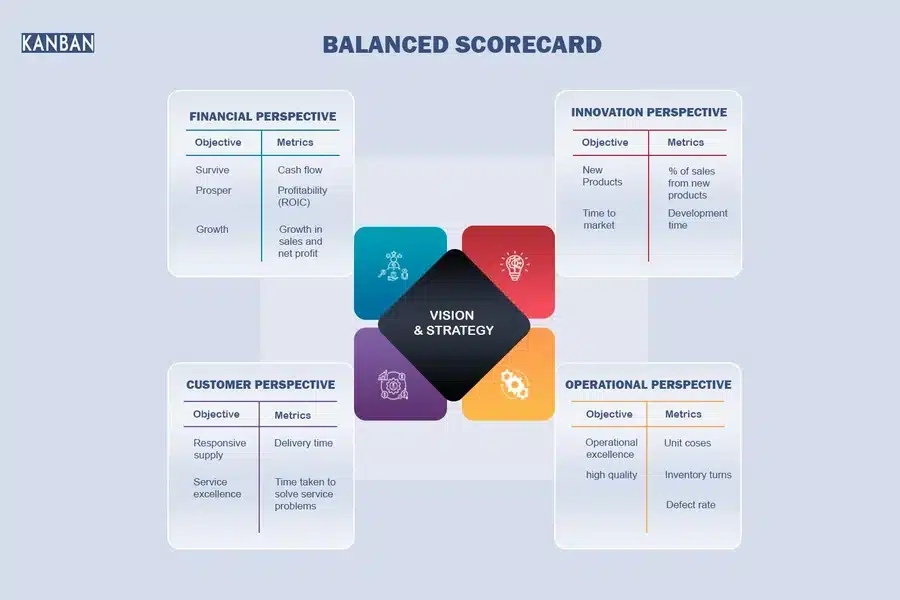
In today’s highly competitive business landscape, organisations need more than intuition to survive. They must operate with clarity, alignment, and disciplined execution. While many leaders develop ambitious goals, success often depends on whether those goals are translated into actionable strategies across the company. This is where the balanced scorecard becomes a powerful framework, helping organisations bridge strategy and execution in a structured, measurable way.
When used effectively, the balanced scorecard transforms strategic thinking into consistent performance—something every organisation needs to stay competitive. Many of the principles outlined in articles about succeeding in competitive markets, such as maintaining operational discipline, prioritising efficiency, and aligning teams with clear goals, connect directly to the philosophy behind the balanced scorecard.
Why Balanced Scorecard Still Matters in a Fast-Changing World
Originally introduced by Robert Kaplan and David Norton, the balanced scorecard remains relevant because it forces leaders to look beyond short-term financial metrics. Instead, it encourages organisations to measure performance from four critical perspectives:
- Financial performance
- Customer experience and value
- Internal processes
- Learning and organisational growth
This multidimensional view helps companies stay agile in competitive environments. When teams understand how their actions contribute to broader outcomes, they make smarter decisions and execute with greater consistency. The balanced scorecard also fosters long-term thinking by encouraging investment in capabilities, innovation, and people—all essential drivers of sustainable competitive advantage.
Turning Strategy Into Action Through Clear Metrics
One of the biggest challenges organisations face is converting strategy into measurable execution. While many companies set goals, only a few define clear indicators of what success really looks like. The balanced scorecard solves this by creating a structured system of objectives, metrics, targets, and initiatives.
For example, instead of simply saying “improve customer satisfaction,” the balanced scorecard clarifies how it will be measured—such as through NPS scores, repeat purchase rates, or support resolution time. This approach ensures a stronger connection between strategic intent and operational behaviour, reducing ambiguity and helping teams stay aligned.
Using a digital platform like Profit.co helps streamline this process by allowing leaders to define objectives, track KPIs, monitor progress, and create dashboards that make performance visible across the organisation. Visibility creates accountability, and accountability fuels execution excellence—one of the key qualities needed for winning in competitive markets.
Creating Alignment Across Teams and Departments
Competitive organisations move as one. When different business units chase different priorities, it creates friction, wasted effort, and misaligned goals. The balanced scorecard eliminates this by acting as a single source of truth for strategy.
Every team—from marketing to operations to finance—aligns their goals to the same strategic pillars. This creates clarity around what truly matters and helps employees understand how their work contributes to business success.
Platforms such as Profit.co make this alignment easier by connecting every goal and KPI to company-level strategic themes. Instead of working in silos, teams collaborate more effectively, share insights, and adjust priorities based on real-time performance.
Driving Performance Through Continuous Review
The balanced scorecard is not a once-a-year exercise. Its real value emerges when organisations use it for continuous learning and improvement.
Through frequent review cycles, leaders can identify issues early, recalibrate strategies, and ensure teams stay focused even when market conditions shift. This rhythm of execution directly supports competitiveness by enabling faster decision-making and agile responses to challenges.
Regular check-ins, KPI reviews, and structured discussions about performance create a culture of transparency and accountability. When supported by a platform like Profit.co, these reviews become even more effective, as teams gain instant access to progress dashboards, insights, and trends.
Building a High-Performance Culture That Sustains Success
Competitive advantage is not built by strategy alone—it requires culture. The balanced scorecard strengthens organisational culture by promoting clarity, discipline, and shared ownership of results. When employees see how their daily work impacts customer satisfaction, financial health, and long-term growth, they become more engaged and motivated.
Additionally, the learning and growth perspective encourages companies to invest in training, innovation, and talent development. These investments not only improve current performance but also prepare the organisation for future challenges—ensuring long-term competitiveness.
Conclusion
Succeeding in a competitive business world requires more than ambition—it demands alignment, clarity, and disciplined execution. The balanced scorecard brings these elements together by linking strategy to measurable outcomes, aligning teams across the organisation, and promoting continuous performance improvement. With the support of a modern execution platform like Profit.co, organisations can operationalise their strategy and build a high-performance culture capable of consistently outperforming competitors.
By embracing the balanced scorecard, organisations lay the foundation for sustainable success in any competitive environment, especially when supported by insights and tools from nebulic.
