

Welcome to our comprehensive guide on laser tattoo removal! If you’re considering removing a tattoo, we’ve got you covered. In this article, we’ll walk you through everything you need to know about the laser tattoo removal procedure and the recovery process. Whether you’re looking to remove a small design or a larger, more intricate tattoo, understanding the ins and outs of laser tattoo removal will help you make an informed decision.
Key Takeaways:
- Laser tattoo removal is a popular method for permanently removing unwanted tattoos.
- The procedure involves using advanced laser technology to break down tattoo pigments.
- Multiple tattoo removal sessions are usually required for optimal results.
- Aftercare and proper recovery are crucial for minimizing potential side effects and achieving the best outcome.
- Consulting with a qualified professional is essential to ensure personalized advice and guidance throughout the process.
The Laser Tattoo Removal Procedure
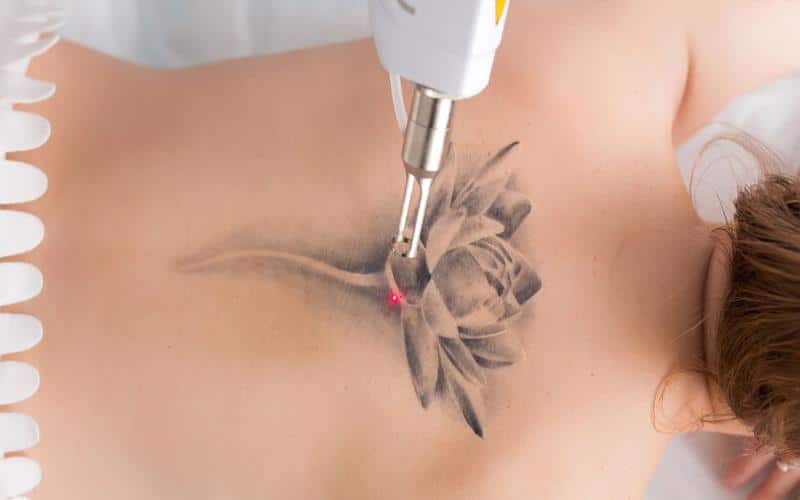
In this section, we will delve into the laser tattoo removal procedure. Laser tattoo removal is a highly effective and popular method for removing unwanted tattoos. It involves using advanced laser technology to target and break down the tattoo pigments, allowing your body to naturally eliminate them over time.
The process works by emitting controlled laser energy onto the tattooed area. The laser light is absorbed by the tattoo ink, causing it to fragment into tiny particles. These fragmented particles are then gradually cleared away by the body’s immune system.
It’s important to note that laser tattoo removal is not a one-time procedure. Depending on various factors, such as the size and complexity of the tattoo, as well as the type of ink used, multiple tattoo removal sessions may be required to achieve satisfactory results. Each session typically lasts between 15 and 30 minutes, although this can vary depending on the size and color of the tattoo.
During a tattoo removal session, you may experience some discomfort, similar to the sensation of a rubber band snapping against your skin. However, most people find the pain to be tolerable and well worth the results they hope to achieve. Your tattoo removal specialist may utilize cooling techniques or numbing creams to help minimize any discomfort. masstamilan
The success rate of laser tattoo removal can vary depending on several factors. Tattoo size, ink colors, and skin type can all play a role in the effectiveness of the procedure. Darker colors, such as black or blue, usually respond better to laser treatment, while lighter colors like yellow or green may be more challenging to remove. Additionally, individuals with fair skin tend to see better results compared to those with darker skin tones.
By understanding the laser tattoo removal process and its intricacies, you can approach your tattoo removal journey with confidence and realistic expectations. It’s important to consult with a qualified tattoo removal specialist who can assess your specific situation and develop a personalized treatment plan tailored to your needs.
Tattoo Removal Recovery Tips
After undergoing laser tattoo removal, proper aftercare and recovery are crucial for optimal results. Here are some essential tattoo removal recovery tips to ensure a smooth healing process and excellent outcomes:
The Healing Process
After each laser tattoo removal session, you can expect some common side effects, including redness, swelling, and blistering. These are normal and typically subside within a few days.
To aid the healing process, it’s important to keep the treated area clean and dry. Avoid picking at scabs or scratching the skin, as this can lead to infection and impede the healing process.
Post-Treatment Care
Proper post-treatment care plays a significant role in tattoo removal aftercare. It’s crucial to follow these steps to enhance the recovery process:
- Apply an ice pack or cold compress to the treated area to reduce swelling and discomfort.
- Avoid exposing the treated area to direct sunlight, as UV rays can hinder the healing process and cause hyperpigmentation.
- Protect the treated area with a clean and breathable dressing, especially during the initial healing stages.
- Keep the area moisturized with a gentle, fragrance-free lotion or ointment recommended by your healthcare provider.
- Avoid strenuous activities that may cause excessive sweating or friction on the treated area.
- Follow any additional instructions provided by your tattoo removal specialist to ensure optimal healing.
By following these tattoo removal recovery tips and giving your body the time it needs to heal, you can help achieve the best possible outcome from your laser tattoo removal treatment.
Conclusion
In conclusion, laser tattoo removal offers a highly effective solution for those looking to permanently remove unwanted tattoos. By understanding the laser tattoo removal procedure and following proper recovery tips, you can confidently embark on your ink-free journey. It is important to note that laser tattoo removal should always be performed by a qualified professional to ensure safety and optimal results.
Throughout this article, we have explored the ins and outs of laser tattoo removal, from the procedure details to the recovery process. We have discussed how advanced laser technology targets and breaks down tattoo pigments, the importance of multiple tattoo removal sessions, and the factors that can affect the success of the procedure.
Additionally, we have provided essential tattoo removal recovery tips, including the typical healing process and post-treatment care. It is crucial to follow these guidelines to minimize potential side effects and promote proper healing.
Remember, if you are considering laser tattoo removal, consult a qualified professional who can assess your unique situation and provide personalized advice and guidance throughout the process. With the right knowledge and the support of a trusted expert, you can confidently say goodbye to unwanted tattoos and embrace a fresh start.
