

In the world of agriculture, efficiency and sustainability are crucial to meet the growing demands for food production. Center pivot irrigation (CPI) stands out as a game-changing technology that has transformed how farmers water their crops. Offering a dramatic improvement over traditional methods like flood or furrow irrigation, CPI systems provide precise water management, leading to increased crop yields while conserving water and reducing labor costs. This comprehensive guide delves into what center pivot irrigation is, its benefits, how it operates, and its impact on modern agriculture.
What is Center Pivot Irrigation?
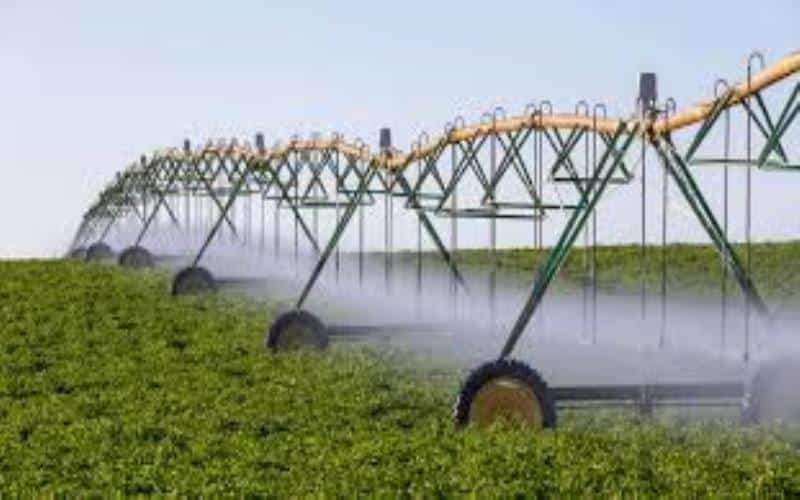
Center pivot irrigation is an automated watering system used predominantly in large, flat fields. It consists of several segments of metal pipe joined together and supported by trusses mounted on wheeled towers. The system pivots around a central concrete pad, hence the name, and is powered by electric motors or hydraulic systems which allow it to move in a circular pattern. As it rotates, the CPI system sprinkles water across the field, ensuring even distribution and precise application tailored to specific crop requirements.
Components of a Center Pivot System
A typical CPI system includes several key components:
- Central Pivot Point: This is the fixed point around which the system rotates. It houses the main water supply line and controls for the irrigation system.
- Spans: These are the metal pipes extending from the pivot point out towards the outer edge of the circle. Spans are supported by towers that roll on wheels, allowing the entire assembly to rotate.
- Sprinkler Heads: Mounted along the spans, these are designed to deliver water from the pipes to the crops below. Sprinkler heads can be adjusted to control the amount of water emitted, ensuring that each area receives the right amount based on soil and crop needs.
- Drive Units: Each tower is equipped with its own drive unit, which includes a motor and gears necessary to move the towers and thus rotate the pivot.
- Control Panel: Modern CPI systems are often equipped with sophisticated control panels that enable remote management through computers or smartphones, allowing for adjustments in water scheduling and volume based on weather conditions and soil moisture levels.
Benefits of Center Pivot Irrigation
- Water Conservation: One of the primary advantages of CPI is its ability to conserve water. By applying water directly to the root zone of plants, it reduces runoff and evaporation compared to traditional surface irrigation methods. This is particularly vital in arid regions where water is scarce.
- Increased Crop Yields: Uniform and precise water application ensures optimal plant growth and health, which in turn increases crop yields. Farmers can also integrate fertilizers into the irrigation system, a practice known as fertigation, further enhancing crop productivity.
- Energy Efficiency: CPI systems are designed to be energy-efficient. The use of electric motors for the moving parts and the ability to operate under lower pressure than traditional sprinkler systems reduces overall energy consumption.
- Labor Savings: The automation of CPI systems drastically reduces the manpower required for crop irrigation. Once set up, the system can operate independently with minimal supervision, freeing up labor for other tasks.
- Flexibility: CPI can be used for a variety of crops and is adaptable to different field sizes and shapes, although it is most efficient in circular fields maximized to fit the pivot’s reach.
Challenges and Considerations
While center pivot irrigation systems offer numerous benefits, they are not without challenges:
- Initial Investment Cost: The upfront cost of installing a CPI system can be significant, making it a substantial investment that might be out of reach for smaller farms without access to financing.
- Maintenance Requirements: Regular maintenance is required to keep the system running efficiently. This includes checking the tire pressure, ensuring the alignment of the drive units, and cleaning the sprinkler nozzles.
- Water Source Reliability: CPI systems require a consistent and reliable water source. In areas where water availability is variable, this can be a limiting factor.
- Land Requirements: The most efficient use of a CPI system is on large, flat, and relatively round fields. Odd-shaped fields can lead to areas being either over-irrigated or not irrigated at all.
The Future of Center Pivot Irrigation
As technology continues to advance, so too does the sophistication of CPI systems. Innovations in sensor technology, data analytics, and automated controls are making these systems even more efficient and easier to manage. The integration of IoT devices and precision agriculture techniques is expected to further enhance the effectiveness of CPI, making it an even more vital tool in the arsenal of modern agriculture.
In conclusion, center pivot irrigation represents a significant advancement in agricultural technology, offering a sustainable and efficient method to meet the world’s increasing food production needs. By addressing its challenges and leveraging new technologies, CPI continues to evolve, helping farmers maximize resources while minimizing environmental impacts.
