

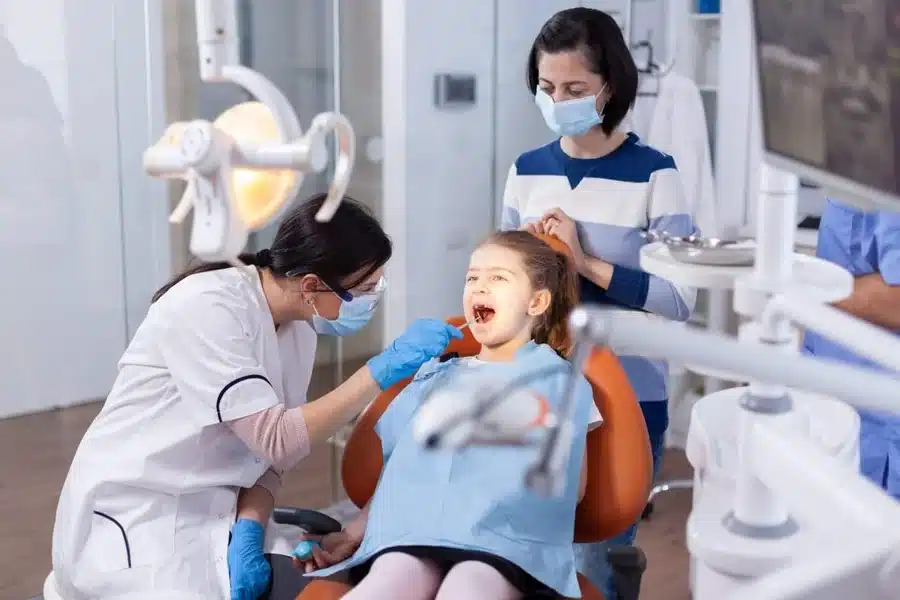
Your child’s first dental visit can feel heavy. You want to protect their smile, avoid pain, and stop small problems from growing into emergencies. Yet sitting in a new office, with new sounds and new faces, can stir worry for both you and your child. Clear questions give you control. They help you understand what is happening, what comes next, and how to care for your child at home. This guide shares six direct questions you can ask any dentist in Monterey Park, CA during that first visit. Each question focuses on simple steps you can take right away. You will learn what to expect during the exam, how often to schedule visits, and how to handle fear or past trauma. You will also hear how to prevent cavities, protect teeth during sports, and respond when something hurts.
1. What will you do during this first visit?
You and your child should know what will happen before anyone leans back in the chair. Ask the dentist to walk through the visit in clear steps. This reduces fear for your child and gives you a chance to speak up.
Ask the dentist to explain:
- How they will look at teeth, gums, and jaw
- Whether X rays are needed and why
- How they will clean the teeth
You can say, “Please tell my child what you are doing before you do it.” This simple request builds trust. It also teaches your child that they can ask questions in health settings.
2. How healthy are my child’s teeth right now?
You deserve clear words about what the dentist sees. You do not need complex terms. You need a simple picture of your child’s mouth today.
Ask:
- “Do you see any early decay or weak spots?”
- “Are the gums healthy?”
- “Are there any teeth we need to watch closely?”
Then request a plain summary. For example, “Please explain my child’s mouth in three short points.” This helps you remember the main message when you go home.
3. How often should my child come in, and why?
Most families hear “twice a year” and stop there. Yet your child’s needs may differ. The right schedule depends on age, past cavities, brushing habits, and medical history.
Ask the dentist:
- “How often should my child return?”
- “What risk level is my child in for cavities?”
- “What would change this schedule?”
Then ask the dentist to connect the visit schedule to real outcomes. For example, fewer cavities, less pain, and fewer missed school days.
Typical Visit Schedules by Cavity Risk (Children)
| Risk level | Signs | Suggested visit frequency |
|---|---|---|
| Low | No cavities, strong brushing, rare sweets | Every 6 to 12 months |
| Moderate | Past small cavities, some missed brushing | Every 6 months |
| High | Recent cavities, sugary drinks, weak brushing | Every 3 to 4 months |
Use this table as a guide. Then follow the plan you agree on with your dentist.
4. What should our daily routine at home look like?
Most of your child’s mouth care happens in your home, not in the chair. You need a routine that fits your real life. It must be clear and simple.
Ask the dentist:
- “How often should my child brush and for how long?”
- “Does my child need floss yet?”
- “Which toothpaste and brush size should we use?”
You can also ask for a quick show and tell. The dentist or hygienist can show your child how to brush and floss. Ask them to show you how to help if your child is young.
The National Institute of Dental and Craniofacial Research gives clear guidance on brushing, flossing, and fluoride for children.
5. How can we handle fear, sensory overload, or past trauma?
Some children feel scared in a dental chair. Bright lights, new tools, and sounds can feel rough. Past pain at a dentist or doctor can make this worse. You are not alone if this is your child.
Ask the dentist:
- “How do you help nervous or sensitive children?”
- “Can we use a ‘stop’ signal if my child feels flooded?”
- “Can I stay close to the chair?”
Request three concrete steps the office will use. For example:
- Short visits with breaks
- Clear counting before each step
- Letting your child hold a toy or comfort object
These simple acts reduce fear and build trust over time.
6. How can we prevent injuries and handle emergencies?
Childhood comes with falls, sports, and rough play. Mouth injuries can happen fast. You need a clear plan before you face a crisis.
Ask the dentist:
- “Does my child need a mouthguard for sports?”
- “What should I do if a tooth chips or breaks?”
- “What if a whole tooth comes out?”
Request a one page emergency sheet. Ask it to include:
- Office phone and after hours number
- Steps to take if a permanent tooth is knocked out
- When to go straight to urgent care or an emergency room
Putting it all together
Your child’s first visit is not just a checkup. It is the start of a long relationship. Clear questions help you shape that bond. They protect your child’s mouth and reduce stress for your family.
During the visit, stay focused on three goals. Understand what is happening today. Get a simple plan for home. Leave with clear steps for the next visit and for emergencies.
You are your child’s strongest voice. When you ask direct questions, you give your child safety, comfort, and a better chance for a lifetime of strong teeth.
