

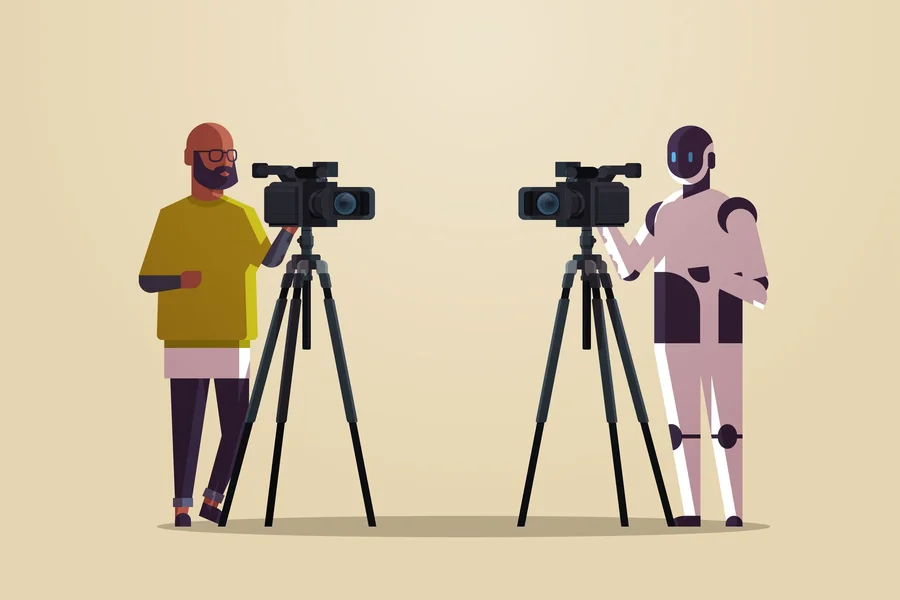
For years, digital video editing remained tied to timeline-based software interfaces. Creators spent hours manually scrolling through raw footage, clipping frames, aligning audio tracks, typing captions, and configuring color parameters. While non-linear editing (NLE) platforms gave editors fine control, they required a high learning curve and significant time investment.
Today, the intersection of Large Language Models (LLMs) and computer vision is changing that workflow. Generative AI has moved beyond simple text generation into dynamic multimedia assembly. By connecting conversational intelligence directly to media engines, creators can organize raw footage, draft scripts, generate high-resolution visuals, and build functional timeline cuts using natural language. This shift toward conversational media workflows marks a major transition in digital storytelling.
The Architecture of Conversational Video Creation
Historically, AI applications in video were isolated to specific tasks—like background removal, automatic captioning, or noise cancellation. While helpful, these functions still required users to manually manage asset assembly inside traditional editing software.
Modern generative ecosystems take an integrated approach by bridging text-based intelligence with multimedia timeline engines. Instead of treating text generation, visual generation, and timeline assembling as separate actions, conversational video workflows connect these steps into a single pipeline.
-
Ideation and Scripting: Creators input core themes, target audience details, or rough outlines. The AI structures these inputs into voiceover scripts, scene breakdowns, and shot lists.
-
Asset Generation and Footage Analysis: The system generates supportive imagery or processes user-uploaded raw clips to identify usable moments, matching visual content to script pacing.
-
Automated Rough-Cut Assembly: Rather than returning a locked video file, the system translates text commands into an editable multi-track timeline draft complete with matched audio, transitions, and subtitle tracks.
From Text Prompts to Timeline Drafts
A major challenge in traditional AI video generation has been the lack of post-generation editability. Early text-to-video tools outputted rendered video files directly. If a scene contained an unwanted element or pacing felt slightly off, creators had to rewrite the prompt and re-render the entire video from scratch.
Modern workflows solve this limitation by separating draft assembly from final rendering. Through deep platform integrations, natural language processing translates high-level prompts into actionable timeline instructions.
Using a dedicated workflow like the ChatGPT video editor, creators can describe a project’s goals, supply raw footage, and receive a working multi-track project file in CapCut. This rough cut acts as a structured foundation rather than a final product. Editors retain granular control over every element: they can tweak clip durations, reorder scenes, adjust audio mix levels, swap stock media, and apply custom brand assets.
This hybrid approach combines the speed of automated structural assembly with the precision of manual post-production.
High-Fidelity Visual Generation in the Creative Pipeline
Visual storytelling relies heavily on strong imagery. Whether building storyboard sequences, designing thumbnail concepts, or generating custom B-roll, high-quality image generation is essential to modern video workflows.
The evolution of image models has significantly enhanced scene consistency, text rendering within graphics, and prompt accuracy. Models such as ChatGPT Images 2.5 enable creators to generate sharp, style-consistent visuals directly from descriptive prompts.
Within a unified multimedia workflow, these visual generation tools serve multiple purposes:
-
Concept Art and Storyboarding: Visualizing key scenes, lighting styles, and camera angles before filming begins.
-
Custom Motion Graphics and Assets: Generating unique background textures, illustrations, and thematic overlays tailored to specific project themes.
-
E-Commerce and Promotional Media: Producing polished product visual concepts, social media banners, and promotional cards rapidly without expensive studio setups.
When integrated into video creation pipelines, these AI-generated images can be converted into dynamic video elements via image-to-video animation, visual overlays, or structured slideshows.
Comparing Traditional vs. AI-Assisted Video Editing Workflows
Best Practices for Implementing AI Video Workflows
While AI tools streamline production, high-quality video content still requires human creative vision. To maximize results when working with AI-driven video engines, consider these strategies:
1. Craft Specific Contextual Prompts
AI models respond best to clear parameters. Instead of entering broad requests (e.g., “Make a video about healthy eating”), specify the format, target audience, tone, and pacing:
“Draft a 60-second vertical social media video explaining three benefits of meal prepping for busy professionals. Keep the tone energetic, use fast-paced transitions, and include modern typography for on-screen captions.”
2. Treat Automated Outputs as Starting Points
Automation works best when accelerating tedious early steps—like clip organization, initial trimming, and caption generation. Always review generated timelines manually to refine frame-accurate cuts, verify transcript accuracy, and ensure visual consistency.
3. Maintain Visual and Audio Identity
Generative tools can produce a wide variety of visual styles. To maintain brand consistency across campaigns, establish fixed prompt parameters for visual assets—specifying color palettes, lighting styles, and art directions—and apply unified sound design during final editing.
The Future of Conversational Media Production
The convergence of natural language processing and video editing tools represents more than just a speed improvement; it fundamentally changes who can produce professional-grade video content. By lowering technical barriers, creators, marketers, educators, and small businesses can transform abstract concepts into finished media quickly.
As AI models become more context-aware, future editing engines will offer even deeper integration—enabling real-time voice-driven timeline adjustments, instant multi-platform aspect ratio reformatting, and real-time localized voice dubbing. However, the core principle remains unchanged: technology accelerates the mechanics of production, while human creativity drives the story.
